What to check before reserving a helicopter tour over Niagara Falls
Booking a helicopter flight over Niagara Falls is a straightforward decision for many visitors. The real question is which tour gives you the experience you are hoping for. With several operators offering flights over the Horseshoe Falls, the American Falls, and the Niagara River, a few simple checks can make the difference between a memorable ride and a disappointing one.
The points below cover the practical details that matter most. They are not listed in order of importance, because different travellers value different things. Some want the longest flight time; others care most about getting a window seat or flying in a specific helicopter model. Read through each point and decide what matters for your trip.
Flight duration and route
The length of a helicopter tour is usually the first thing people compare. A short flight might last ten to twelve minutes, while a longer tour can go up to twenty minutes or more. The route matters just as much. A good tour should fly over both the Horseshoe Falls and the American Falls, and ideally follow the Niagara River downstream past the Whirlpool Rapids. Some flights turn back early and miss the rapids entirely. Check the advertised route and duration before you book. If the website does not list a clear route, call or email the operator to ask.
The difference between a ten-minute flight and a fifteen-minute flight is significant. In a shorter flight, the pilot may have time for only one pass over the falls. A longer flight allows for a second pass or a slower circuit, which gives you more time to look and take photos. If seeing the full breadth of the falls and the river is important to you, aim for a tour that covers the entire gorge.
Helicopter model and seating
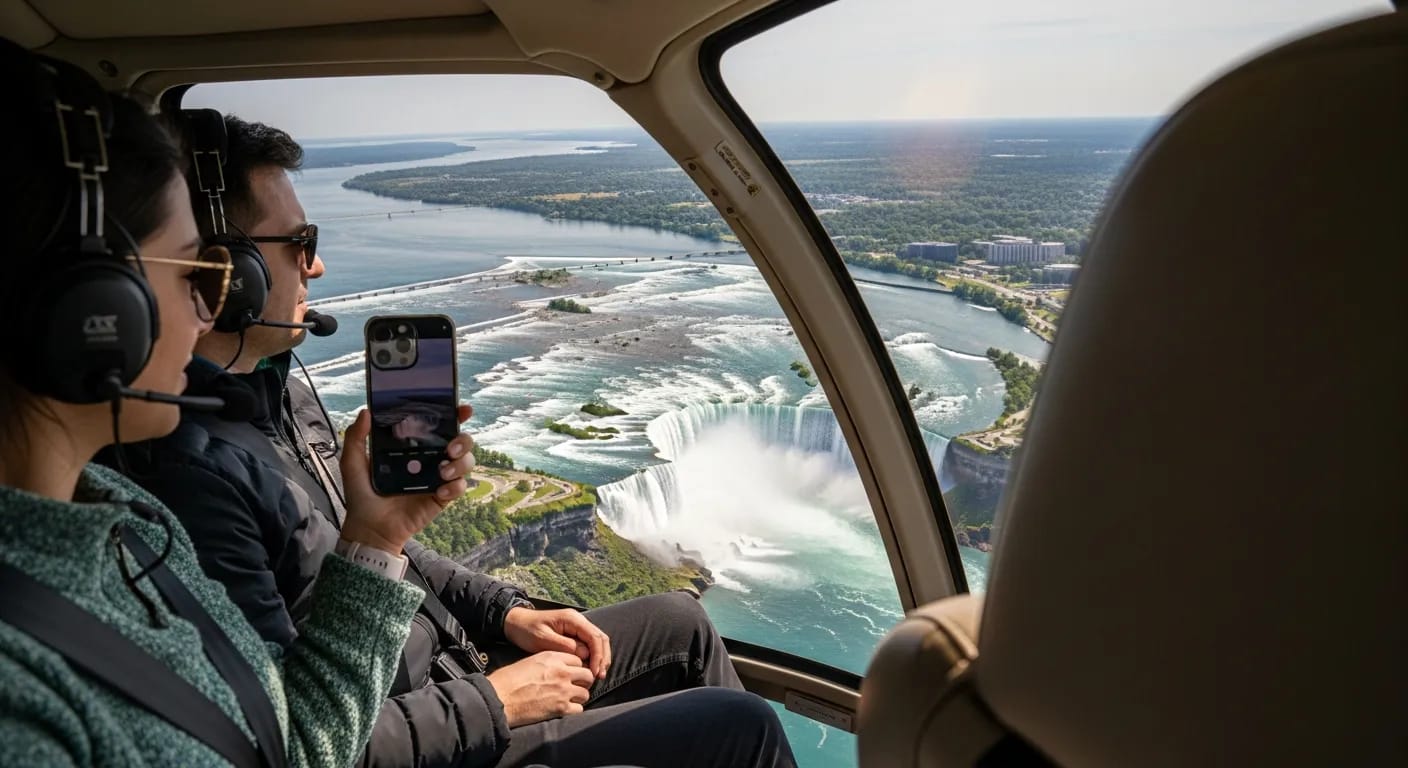
Not all helicopters offer the same view. Some models have large windows that give an unobstructed view, while others have struts or frames that break up the sightline. The seating arrangement also affects what you see. In a typical helicopter, the pilot sits on the right, so passengers on the left side of the cabin often get the best view of the falls on the approach. However, the exact seating depends on the flight path and the helicopter model. Some operators allow you to request a window seat at the time of booking, while others assign seats on a first-come, first-served basis.
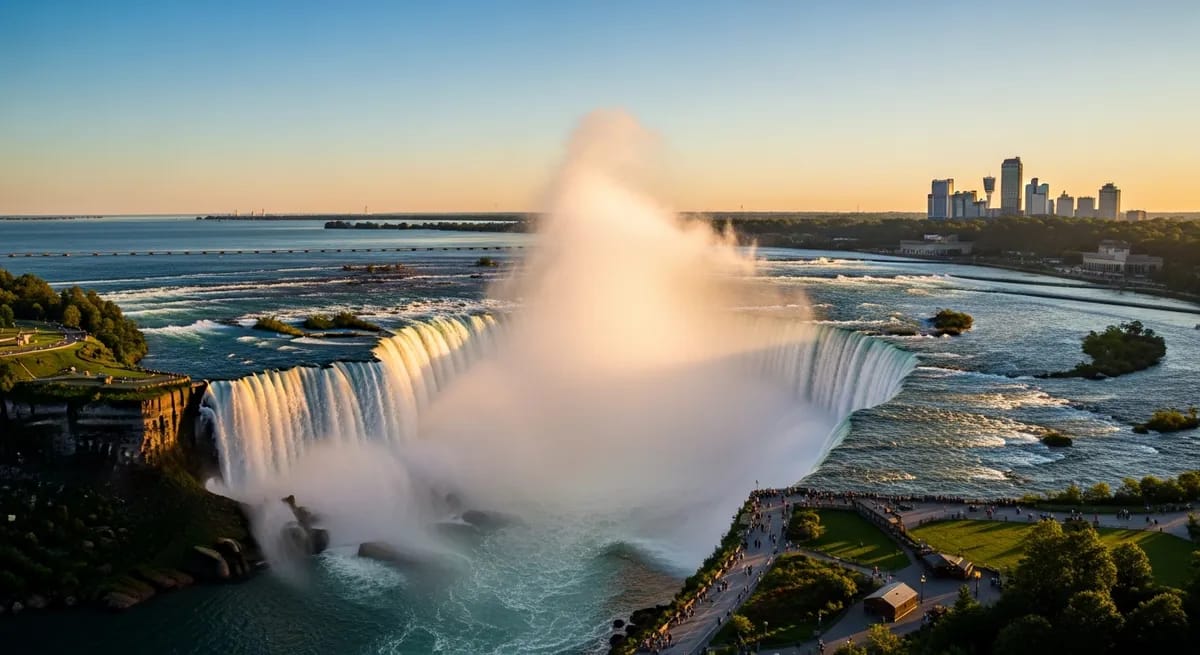
If you are travelling with someone who is nervous about flying, ask about the helicopter model. Modern turbines are quieter and smoother than older piston-engine models. A smoother ride can make a big difference for a nervous passenger. The operator should be happy to tell you which model they use and how many passengers it carries.
Window seat guarantee
A window seat is the single most important factor for most people on a scenic flight. Without a guarantee, you could end up in the middle seat, looking over someone else's shoulder for the whole ride. Some operators sell a "window seat upgrade" or allow you to pay extra to reserve a specific seat. Others include a window seat for every passenger by using a seating configuration that puts each person next to a window. Check the policy before you book.
If you are booking for a group, note that a window seat for everyone is not always possible on a standard tour. Some helicopters seat three passengers across, with only two window seats and one middle seat. In that case, the middle passenger has a restricted view. If everyone in your group wants a direct view, look for an operator that uses a two-abreast seating arrangement or offers private tours where each passenger sits at a window.
Safety briefing and equipment
Every reputable helicopter tour operator gives a safety briefing before the flight. The briefing should cover how to fasten and unfasten the seatbelt, how to use the headset (if provided), and what to do in an emergency. It should also tell you where the emergency exits are and how to open the door from the inside. A good briefing is clear and calm, not rushed or skipped.
You can also check whether the operator provides noise-cancelling headsets. Headsets are standard on most scenic tours, but some budget operators may charge extra or provide basic earplugs instead. Good headsets make it easier to hear the pilot's commentary during the flight and reduce fatigue from engine noise. If commentary is important to you, ask whether the headsets have a microphone so you can talk to the pilot.
Weather policy and cancellation terms
Helicopter flights are weather-dependent. Wind, rain, fog, and low cloud can all cause cancellations or delays. A good operator has a clear weather policy that explains what happens if the flight cannot run. The policy should tell you whether you get a full refund, a credit for a future date, or the option to rebook without penalty. Avoid operators that offer only a partial refund or no refund at all for weather cancellations.
Check the cancellation terms for your own side as well. Life happens, and plans change. A flexible booking policy gives you peace of mind. Some operators allow free cancellations up to 24 or 48 hours before the flight, while others charge a fee. Read the fine print before you pay.
Photography and video rules
Most helicopter tours allow you to bring a camera or smartphone, but rules vary. Some operators ban selfie sticks or GoPro mounts because they can interfere with the controls or distract the pilot. Others restrict video recording during takeoff and landing. If photography is a priority for you, check the rules before you book. Also ask whether the helicopter has a window that opens or slides back. An open window gives a much clearer shot than shooting through scratched or tinted plexiglass.
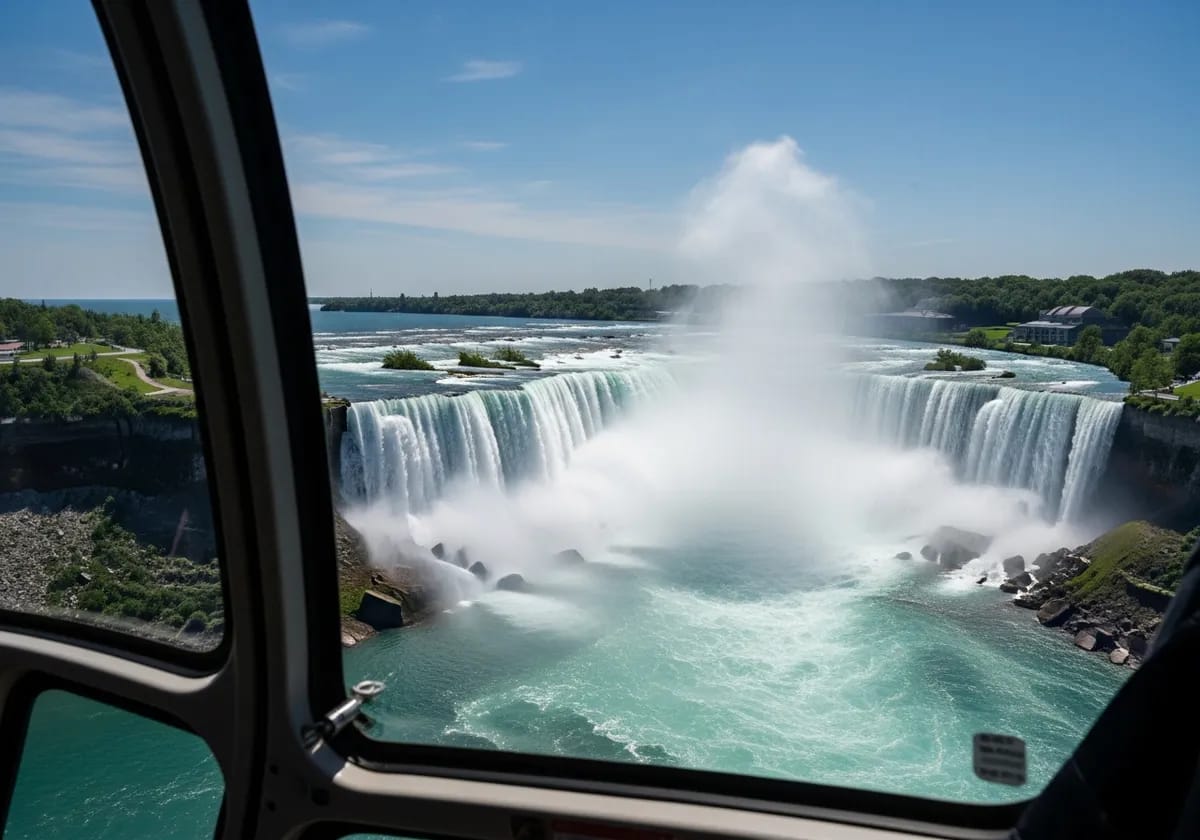
If you plan to take video, consider the lighting conditions. Midday sun creates harsh shadows and glare on the water. Early morning or late afternoon light gives softer colours and better contrast. The falls themselves are impressive at any time, but the photos will look more dramatic in good light.
Reviews and reputation
Online reviews give a good sense of what to expect. Look for recent reviews that mention the flight duration, the pilot's commentary, the condition of the helicopter, and the overall value. Pay attention to patterns: if several reviews mention a rushed briefing or a dirty window, that is a real concern. A single negative review is not unusual, but a cluster of complaints about the same issue is a red flag.
You can also check whether the operator is mentioned on niagarafallshelicoptertours.com. That site lists local helicopter tour options and gives an overview of what each one offers. It is a useful starting point for comparing operators side by side without having to visit each operator's site individually.
Departure location and parking
Most helicopter tours depart from a heliport near the Niagara River, but the exact location can vary by a few kilometres. If you are staying on the Canadian side, look for a departure point that is close to your hotel or easy to reach by car or taxi. Some heliports offer free parking, while others charge a fee. Check whether parking is included in the ticket price or paid separately. A long drive to a remote heliport can eat into your sightseeing time, especially on a busy weekend.
Also check the departure schedule. Some operators run flights every hour on the hour, while others operate on a more flexible timetable. If you are on a tight schedule, a fixed departure time helps you plan the rest of your day. If you prefer spontaneity, a walk-in service may suit you better.
Group size and private tours
If you are travelling with a family or a group of friends, the seating capacity of the helicopter matters. A typical scenic helicopter carries four to six passengers. If your group is larger than the helicopter's capacity, you may be split across multiple flights. Some operators allow you to book the entire helicopter for a private tour. A private tour costs more per person, but it guarantees that your whole group flies together and that you can control the flight path to some extent.
Private tours are also a good option for couples or solo travellers who want a more personal experience. The pilot can adjust the route slightly and point out specific landmarks that interest you. If you are celebrating a special occasion, a private tour adds a sense of exclusivity that a standard group flight cannot match.
Final practical checks
Before you confirm the booking, verify the payment methods accepted. Some operators require a deposit online and accept the balance in cash on the day of the flight. Others take full payment by credit card at the time of booking. Make sure you understand the payment terms and that the booking confirmation includes a receipt or voucher.
Check the minimum age and weight restrictions if you are travelling with children. Most operators allow infants, but some require them to sit on a parent's lap or use a child safety seat. Weight restrictions are usually per seat, and the operator may weigh passengers at check-in to balance the helicopter. If you are close to the weight limit, it is worth asking about the policy in advance to avoid surprises on the day.
Finally, arrive early. A good rule of thumb is to arrive at the heliport at least fifteen minutes before your scheduled departure. This gives you time to check in, use the restroom, and listen to the safety briefing without feeling rushed. A relaxed start to the experience sets the tone for the whole flight.
Booking a helicopter tour over Niagara Falls is not complicated, but a little preparation goes a long way. Check the route, the seating, the safety briefing, and the cancellation policy. Read reviews and compare operators on a site such as niagarafallshelicoptertours.com. And if something does not feel right, trust your instinct and look for another operator. The right tour will give you a view of the falls that you will remember for years.